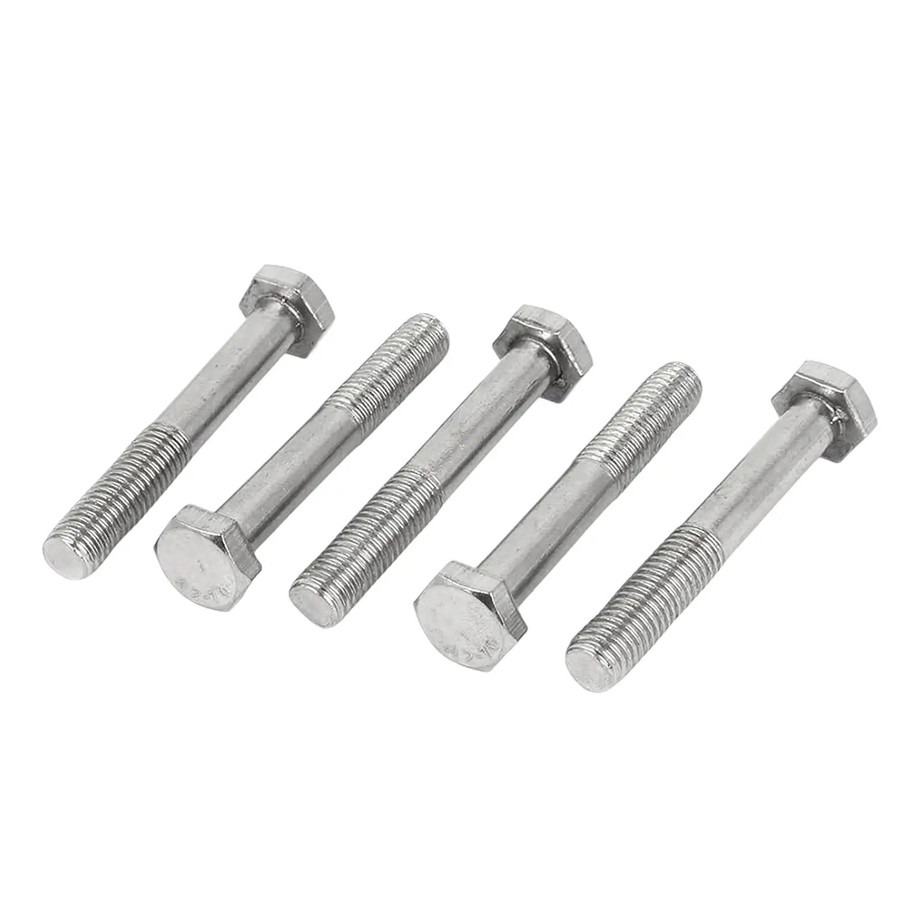
There's something instructive about how industrial fasteners get purchased. In many procurement processes, they're treated as a commodity category — items to be sourced at the lowest available price with the assumption that a screw is a screw and quality variation between suppliers is marginal at best. This assumption is understandable given how small and inexpensive individual fasteners are. It's also consistently wrong in ways that show up at the worst possible moments — during installation, during inspection, and during the operational life of whatever the fasteners are holding together.
Swastik Industrial Works has built its reputation in the standard screws industries by being the supplier that industrial customers turn to when they've learned this lesson and want a fastener partner whose quality they don't have to second-guess. The company's positioning isn't about being the cheapest option in the market — it's about being the most reliable one at a price that makes genuine commercial sense for customers who understand what reliability actually costs when it's absent.
The term standard screws industries encompasses the broad manufacturing and supply ecosystem that produces the fasteners used across construction, manufacturing, infrastructure, automotive, electronics, and virtually every other industrial sector. Within this ecosystem, the word "standard" refers to the dimensional and property specifications that fasteners are manufactured to — the thread standards, head dimensions, material grades, and mechanical property requirements that allow fasteners from different manufacturers to be interchangeable and reliably specified in engineering designs.
Meeting these standards isn't optional — it's the baseline expectation. But the gap between meeting standards minimally and meeting them consistently, across every production batch, across different specifications, and with the traceability that quality-conscious customers require, is where genuine differentiation between suppliers actually exists.
Dimensional accuracy affects how fasteners perform during installation and in service. A screw whose thread profile is slightly off-specification may appear to install correctly but will distribute load unevenly across the thread engagement — creating a joint that performs below what the nominal specification suggests and that may fail under conditions where a correctly manufactured fastener would continue to perform reliably.
Material consistency determines whether the mechanical properties stamped on a fastener's certification documentation — tensile strength, hardness, proof load — actually reflect what the fastener will do under stress in a real installation. Material that doesn't meet its specified grade creates fasteners that look right but aren't right, and the difference isn't detectable without proper testing.
Surface treatment quality determines how well a fastener resists the corrosive environments that many industrial applications involve. A zinc plating that's thinner than specified, or applied less uniformly than quality standards require, deteriorates faster than the installation was designed for — creating maintenance requirements and potential structural concerns that properly treated fasteners would have avoided.
Within the broader fastener category, tapping screws occupy a specific and practically important niche. Unlike bolts that thread into pre-tapped holes or engage a separate nut, tapping screws form their own threads as they're driven — cutting or forming a mating thread in the material they're installed into. This self-threading capability makes them particularly valuable in applications where creating a tapped hole in advance isn't practical, and in thin material applications where a separate nut isn't feasible.
The range of tapping screw types reflects the diversity of materials they're designed to engage. Thread-cutting screws remove material as they're driven, producing a chip that needs to escape through the flute design. Thread-forming screws displace material rather than removing it, creating a thread without producing chips — a significant advantage in enclosed assemblies or applications where contamination from cutting chips is a concern.
Point geometry varies between tapping screw types in ways that determine how easily the screw penetrates the material and how well it starts without wandering across the surface. Head styles and drive configurations affect how the screw is installed and what access conditions the installation requires.
Getting these specifications right for a specific application requires genuine product knowledge — understanding not just what tapping screws are available but which specific type, thread form, point geometry, and surface treatment combination best serves the particular material, application, and service environment in question.
Swastik Industrial Works brings this application knowledge to its tapping screw supply — helping customers identify the right specification rather than simply supplying whatever is most readily available.
Q1. What distinguishes Swastik Industrial Works within the standard screws industries market?
Consistent quality across production batches, dimensional accuracy verified through proper quality control, and the application knowledge that helps customers specify correctly rather than simply ordering generically.
Q2. What types of tapping screws does Swastik Industrial Works supply?
Thread-cutting and thread-forming variants across different point geometries, head styles, drive configurations, and surface treatments suited to different application requirements.